State of the James
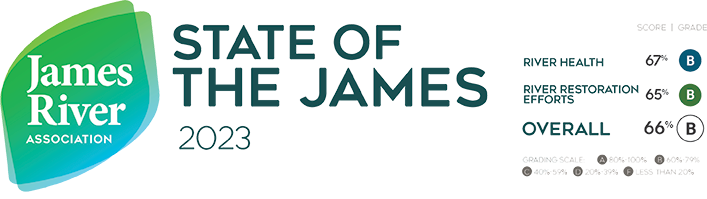
The State of the James is a report card summarizing ongoing efforts to bring the James River back to full health. This comprehensive assessment of the health of the river is published every two years.
The State of the James report is designed to examine the status and trends of indicators in two categories – River Health and River Restoration Progress – that are interconnected and build on each other to achieve a healthy James River. The River Health score is comprised of ten indicators, identified in blue, related to the ecological health of the James. They include fish and wildlife species as well as the habitat features that help these species thrive. The eight River Restoration indicators, identified in green, track our progress as a watershed to complete the restoration actions outlined in Virginia’s Chesapeake Bay Cleanup Plan and reduce the amount of pollution entering the James River by 2025.
For each indicator, the James River Association has identified and compiled quantitative benchmarks set for what is needed to achieve a fully healthy river. When possible, the benchmark is a goal that has been set by the state or an authority on a specific indicator.

The overall grade of the State of the James has improved to a B with a score of 66% from its failing health decades ago. Although the pace of progress has slowed, a grade-A James River is possible if we keep up our collective efforts and continue to address key issues together.
Underwater grasses expanded to their highest total on record and tidal water quality also returned to its recent high. Both of these indicators are largely influenced by pollution from upstream sources, so their collective improvement signifies broader progress.
The James River’s American shad population remains at zero. To save this iconic species and other migratory fish in the James, Virginia must take swift action to address the threats identified in the American shad recovery plan due to the General Assembly in 2023.
Strong investments by Virginia in clean water programs for wastewater, agriculture and urban stormwater has yielded direct improvements in pollution controls and helped to improve the overall health of the river. The more we invest in the river, the more improvement we see in the river’s health.
Climate change is making future progress for the State of the James more difficult. We all must do our part to safeguard the James River for future generations.
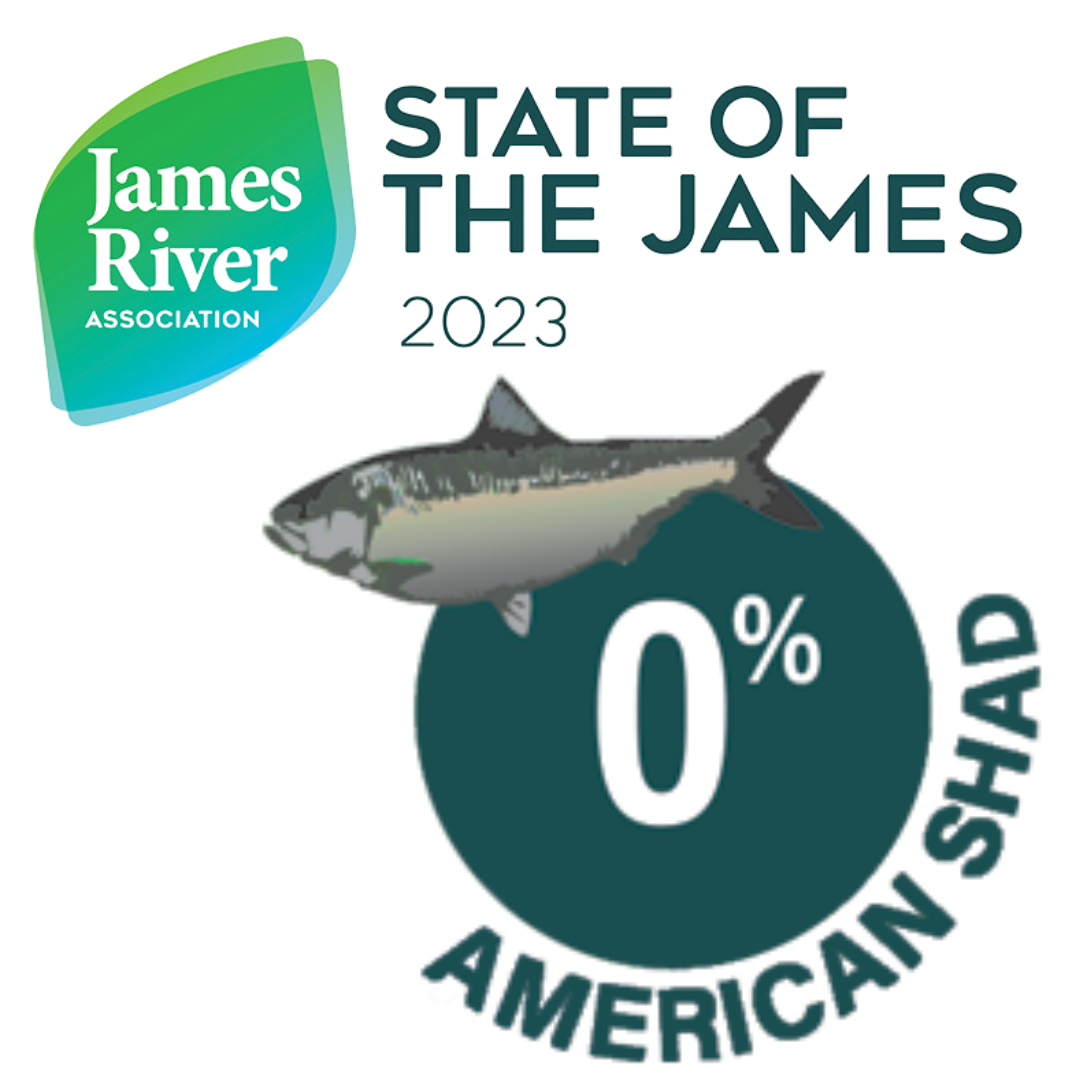 The 2023 American shad stock assessment by the Virginia Institute of Marine Science found that populations of American shad in the James are at an all time low. Given the dire situation, JRA fought for funding to develop an emergency recovery plan that identified immediate actions that could be taken to improve the American shad fishery in the James River. This plan will be delivered to Virginia Legislators in the fall of 2023 with more actions to follow, but it will take a long-term and sustained effort to bring American shad in the James River back from the brink of collapse. Learn more about American shad and the threats that threaten its recovery
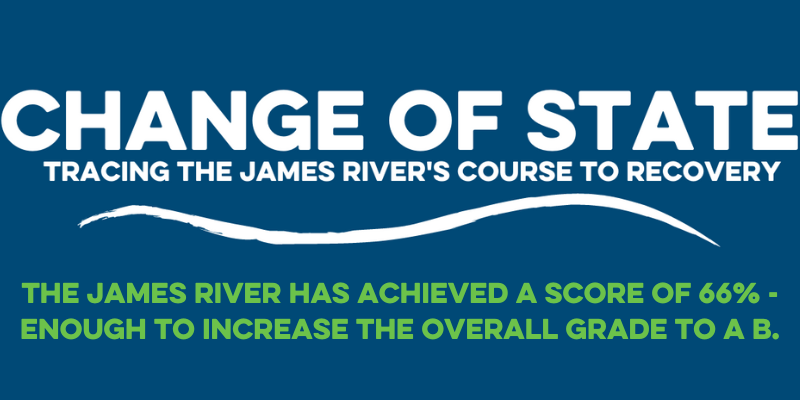
The James River has undergone a remarkable transformation since the 1970s. Yet while long-standing environmental protections have helped to nurse the James back to health, our progress is tentative.
View our Storymap to learn more about the James River’s tenacious comeback, where we stand today, and what we can do to keep the comeback coming.

 DRINKING WATER
2.7 million people rely on the James River for water, making it Virginia’s largest source of drinking water.
 SEAFOOD PRODUCTION
4.1 million pounds of commercial fish and shellfish were landed from the James in 2022, a total dockside value of $11.9 million. The James is home to some of the largest oyster reefs in the world – 754,650 pounds of oysters were harvested in 2020, a total value of $9.4 million and more than 24% of Virginia’s total oyster harvest.
RIVERSIDE PARK VISITATION
 Riverside parks offer opportunities for outdoor recreation and enjoyment. Riverside parks along the James and its tributaries saw over 7 million visitors in calendar years 2021 and 2022.
PUBLIC RIVER ACCESS
There are hundreds of places to enjoy the James and its tributaries. At least 52 public access sites have been added in the watershed since 2013.
HUNTING & FISHING LICENSES
 539,510 people registered boats and purchased hunting and fishing licenses in the watershed in 2022.

2021 Original Webinars

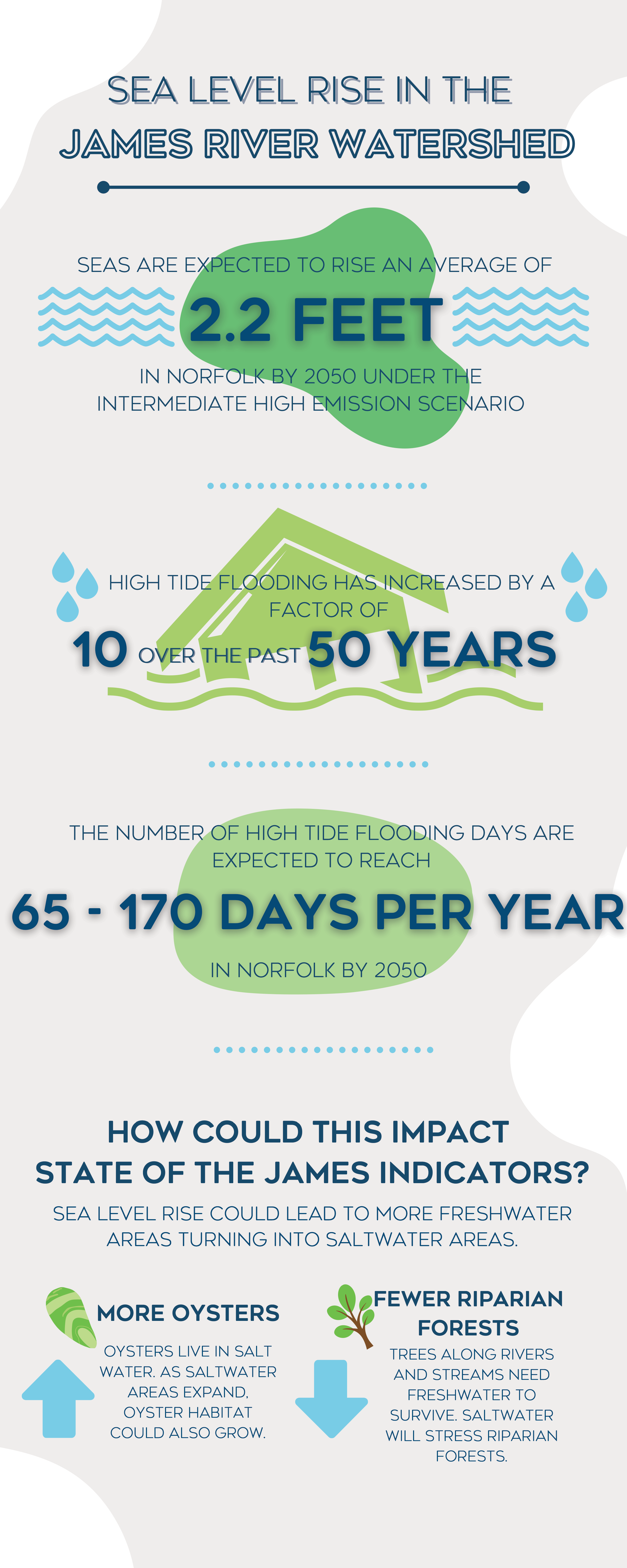
Data Sources: Sea Level Rise
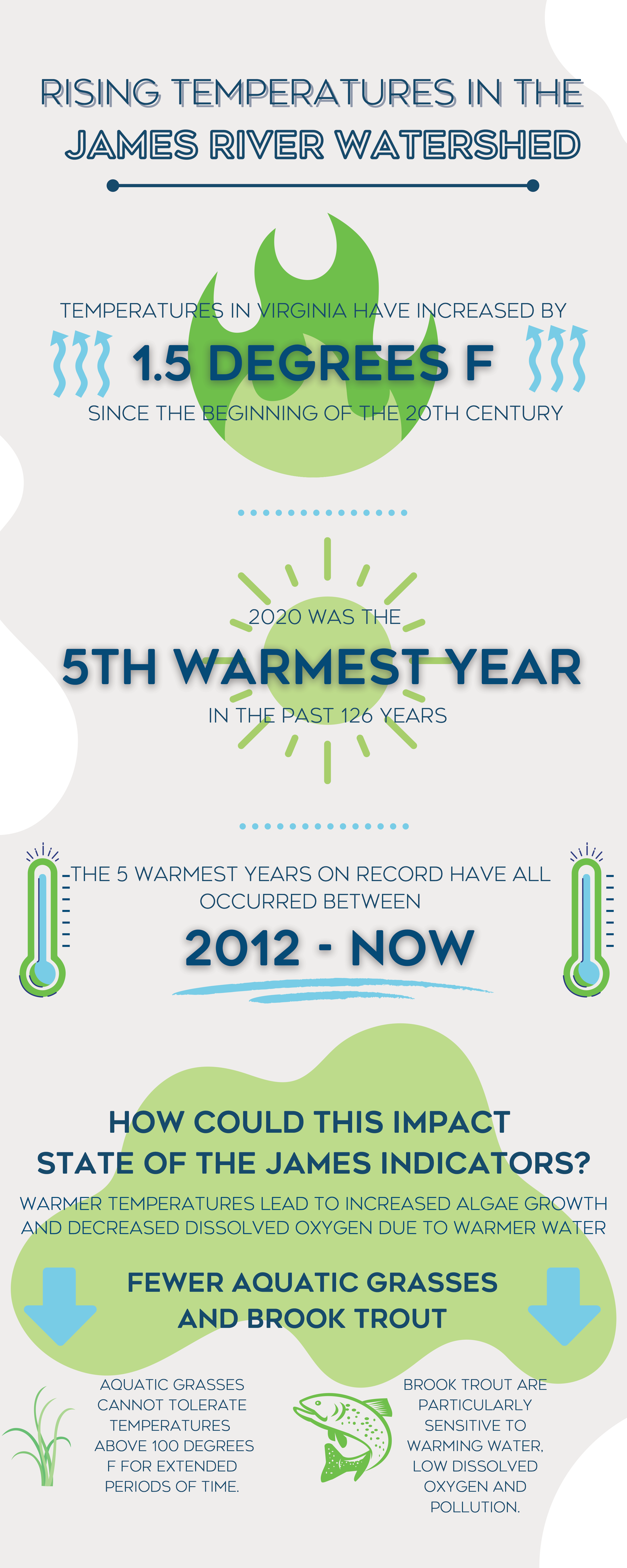
Data Sources: Temperature
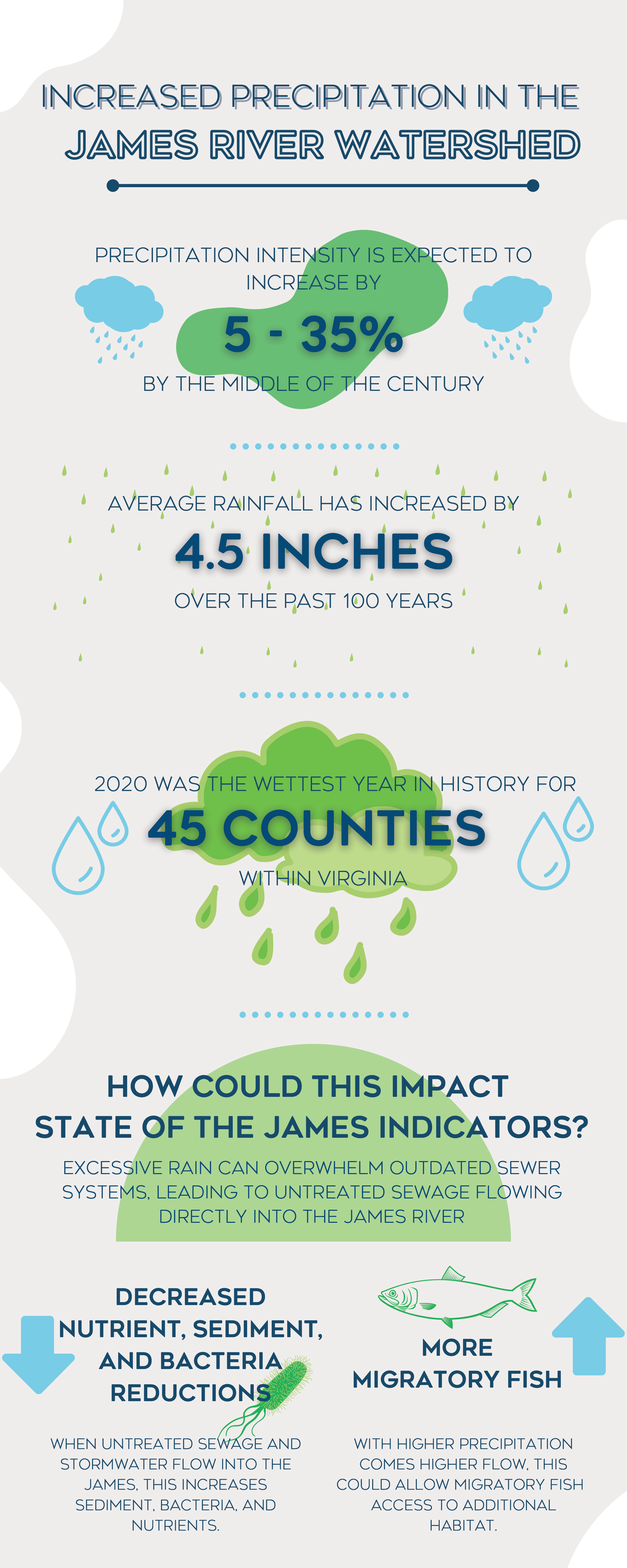
Data Sources: Precipitation
- Chesapeake Bay Network
- NOAA, UMCES, CEC
- John Boyer, Richmond Times Dispatch
CHANGE THE JAMES AND THE JAMES WILL CHANGE YOU
One third of all Virginians live in the James River watershed and benefit from a healthy river. There are many ways you can be a James Changer to improve our river’s health and help us get to a Grade A James in our State of the James report card.
Every time it rains, pollutants including sediment, fertilizers, herbicides, pesticides, bacteria from pet waste, and chemicals flow from our yards into local waterways. Reduce stormwater runoff and pollution at home by joining our River Hero Homes program.
Volunteer to plant trees through our James River Buffer Program to increase our Riparian Forests score to 100%. Your help will ensure Virginia meets the additional 27,000 documented acres of forested riparian buffers across our watershed by 2025, as laid out in our Virginia Cleanup Plan.
Help alert us to potential threats to the James and recreationists like sewage leaks and sediment runoff by being the eyes and ears on the river in our RiverRats program.
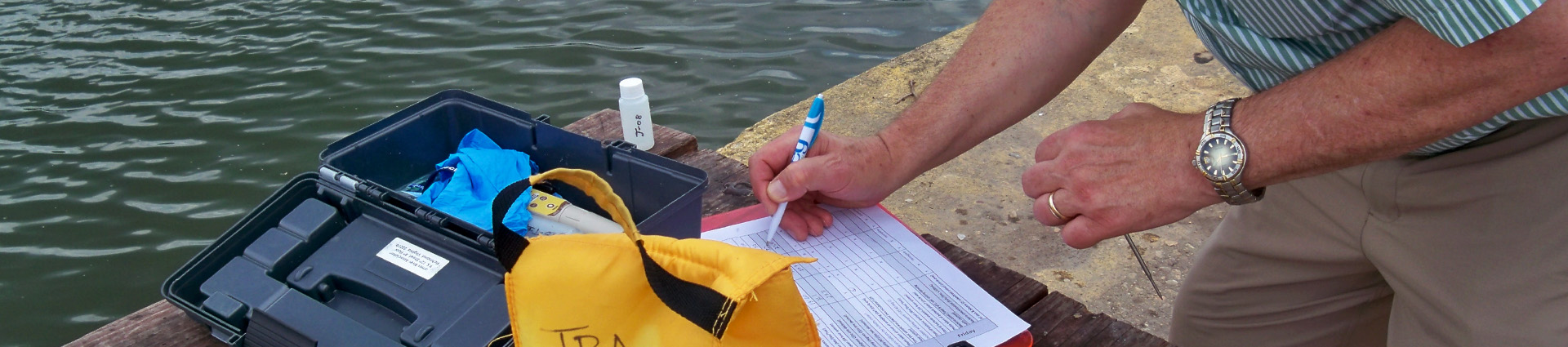
Help us keep an eye on bacteria levels in the watershed by volunteering with James River Watch, our water quality monitoring program.
Introduce someone to the James through our Connect with the James program, and empower them to fully realize the Benefits of a Healthy James and the impact the James has on our communities and local wildlife.
Become a member of the James River Association, allowing us to reach more students, plant more trees and connect more communities to the James River. Educating the public in future legislation and inspiring conservation efforts will positively change our river as we work together toward a Grade A James.
Acknowledgments
The James River Association would like to thank the following organizations for their contributions to this report: Chesapeake Conservancy, College of William and Mary – Virginia Commonwealth University Center for Conservation Biology, Eastern Brook Trout Joint Venture, National Park Service, Virginia Department of Conservation and Recreation, Virginia Department of Environmental Quality, Virginia Department of Wildlife Resources, Virginia Environmental Endowment, Virginia Institute of Marine Science, University of Maryland Center for Environmental Science, Integration and Application Network, United States Environmental Protection Agency Chesapeake Bay Program, United States Geological Survey, and local governments across the watershed.